Quick answer
Approve a compact substation location only after the project designer has reconciled equipment access, fire exposure, emergency response and the surrounding site use. Ask for a marked site drawing and a register of authority comments. A catalogue footprint alone cannot show whether the installation is acceptable.
Review the installation and the equipment separately
IEC 61936-1 addresses the design and erection of power installations above 1 kV AC, while prefabricated equipment has its own product standards. This supports treating the site arrangement as a separate design responsibility, even when the substation arrives as a factory package. IEC 61936-1 published scope.
The applicable rules and approvals depend on location, transformer construction, surrounding exposures and project conditions. Request the relevant criteria from the designer, utility and authority having jurisdiction. Do not insert a generic fire separation distance into a purchase order and assume it covers every enclosure or transformer.
Mark four distinct access needs
Normal operator access, emergency access, maintenance access and equipment replacement are different use cases. A pedestrian gate may serve the operator but prevent removal of a transformer. A clear vehicle approach today may become a parking or storage area after handover.
| Review area | Site evidence to supply | Decision to record |
|---|---|---|
| Nearby exposures | Buildings, openings, boundaries and adjacent storage | Accepted location or required protective measures |
| Transformer compartment | Proposed transformer construction and arrangement | Information needed for the fire assessment |
| Emergency approach | Gates, access control and relevant response routes | Responsible authority's access requirements |
| Equipment removal | Component dimensions, lifting concept and route | Reserved replacement route and removable features |
| Discharge and drainage interfaces | Proposed venting and drainage arrangements | Coordination with access and environmental design |
The table is a coordination aid. Detailed protective measures and dimensions must come from the applicable design assessment and accepted manufacturer installation requirements.
Example: the location fits, but replacement does not
Imagine a hypothetical commercial site where the compact substation fits between a service road and a building. The initial drawing shows enough area for delivery. Later, a permanent canopy is added over the service road and a fence narrows the only removal route.
The equipment footprint has not changed, but the lifecycle access assumption has. Before approving the canopy, the owner should ask for an updated replacement concept and determine whether the equipment can still be removed using an accepted method. The answer may require changes to the canopy, gate or reserved site area.
This decision should be documented before civil work proceeds. It is usually easier to preserve a route in the site plan than to negotiate demolition and operational disruption years later.
Keep fire review linked to equipment changes
If the transformer construction, enclosure openings or compartment arrangement changes during procurement, the designer should identify whether the site fire assessment needs revision. A substitution accepted electrically is not automatically accepted for every installation condition.
Request a clear division of deliverables: equipment information from the package supplier, site assessment from the appointed designer, and approval comments from the responsible authorities. Record who incorporates each comment into the final drawings and who confirms closure.
Avoid claims such as “maintenance-free access” or “fire-safe enclosure” without a defined and applicable basis. Ask what configuration and conditions the supporting evidence actually covers.
What to include in the enquiry
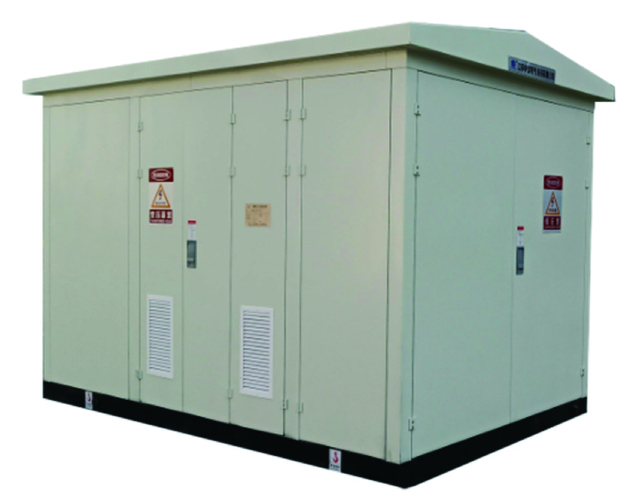
For a European compact substation or American compact substation, provide the proposed location plan, surrounding exposures, access constraints and the authority's preliminary requirements.
Through the project enquiry page, request the equipment outline, service access information and replacement-related dimensions needed for the designer's review. Final equipment scope and installation conditions need confirmation before manufacture.