Quick answer
Define the expected expansion before requesting “future capacity.” A larger initial transformer, a later transformer replacement and a second compact substation create different costs and outage requirements. Ask bidders to explain which path their proposal supports and what must be purchased or redesigned later.
Start with a staged load scenario
Record the initial load, credible future load, timing and uncertainty. Separate new process equipment from loads that may never materialise. Include operating patterns, large motor starts, generation and any requirement to keep existing production supplied during construction.
Use those scenarios to compare options without assuming that every reserved kilovolt-ampere will be used. A conservative project can preserve a feasible expansion route while leaving uncertain equipment purchases for a later decision.
Compare three expansion paths
| Proposed path | What to settle in the first order | What still needs future review | Commercial consequence |
|---|---|---|---|
| Larger initial package | Initial and future operating conditions; enclosure arrangement | Revised loads and utility permission | More initial expenditure; fewer major equipment changes later |
| Transformer replacement | Replacement envelope, access route and connection adaptation | Transformer losses, protection and actual final rating | Lower initial transformer spend; replacement outage and handling cost |
| Second substation | Reserved location and an engineered future connection route | Network study, interconnection and operating philosophy | Expansion can be a separate package; more site infrastructure |
No option guarantees uninterrupted service. Include a written outage assumption in each comparison so that a cheap first-stage offer does not depend on an unacceptable future shutdown.
Reserve electrical and physical interfaces together
A spare LV way does not demonstrate spare transformer capacity. Equally, an enclosure that accepts a larger transformer geometrically may need a fresh thermal review. IEC's prefabricated substation publication identifies enclosure thermal performance among the product design considerations; buyers should request evidence for the actual proposed arrangement, not infer it from empty space. IEC 62271-202 publication scope.
Ask the supplier to identify the limiting component for each scenario. That could be the incoming connection, transformer, bus system, outgoing feeder, enclosure or another interface. Record which limitation is already resolved and which is a future engineering dependency.
Consider equipment removal as well as installation. A future crane position that becomes a permanent loading bay is not a preserved replacement route. Keep the expansion reservation on the site drawing and in the owner's asset records.
Example: a production line that may arrive later
In a hypothetical industrial project, the first production line is approved while a second line awaits a customer contract. The buyer requests two priced alternatives: an initial package designed around the credible combined load, and an initial package with a documented route for a second substation.
The comparison includes initial cost, future connection work, outage duration assumptions and the last date when the owner must choose. It also asks whether the utility connection must change. The final choice follows the business scenario and engineering review; it is not made by automatically adding a percentage to transformer capacity.
Put future provisions in the deliverables
Request a marked expansion drawing, a list of installed provisions and a separate list of merely reserved provisions. For each reserved item, identify its technical assumptions, storage requirements if relevant, and any compatibility information the owner must retain. Include documents for future engineers who may not be the original project team.
Enquiry information for a staged project
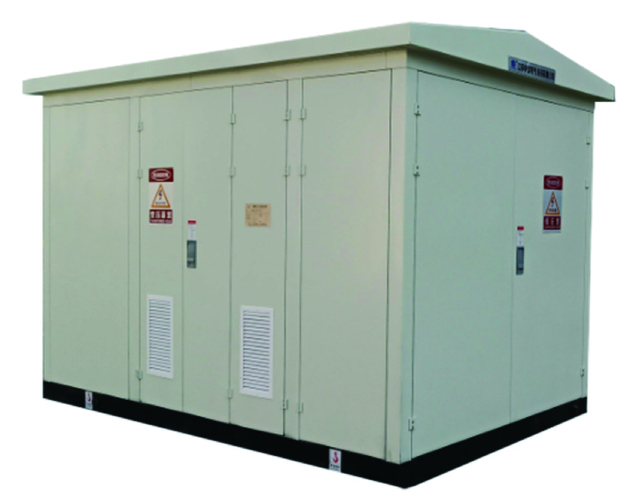
When discussing a European compact substation or YB prefabricated substation, send the initial and future load schedules, expansion timing, utility connection information and outage constraints.
Ask for alternative scopes through the project enquiry page. Equipment capacity, expansion compatibility and the supporting documents must be confirmed against each proposed stage.