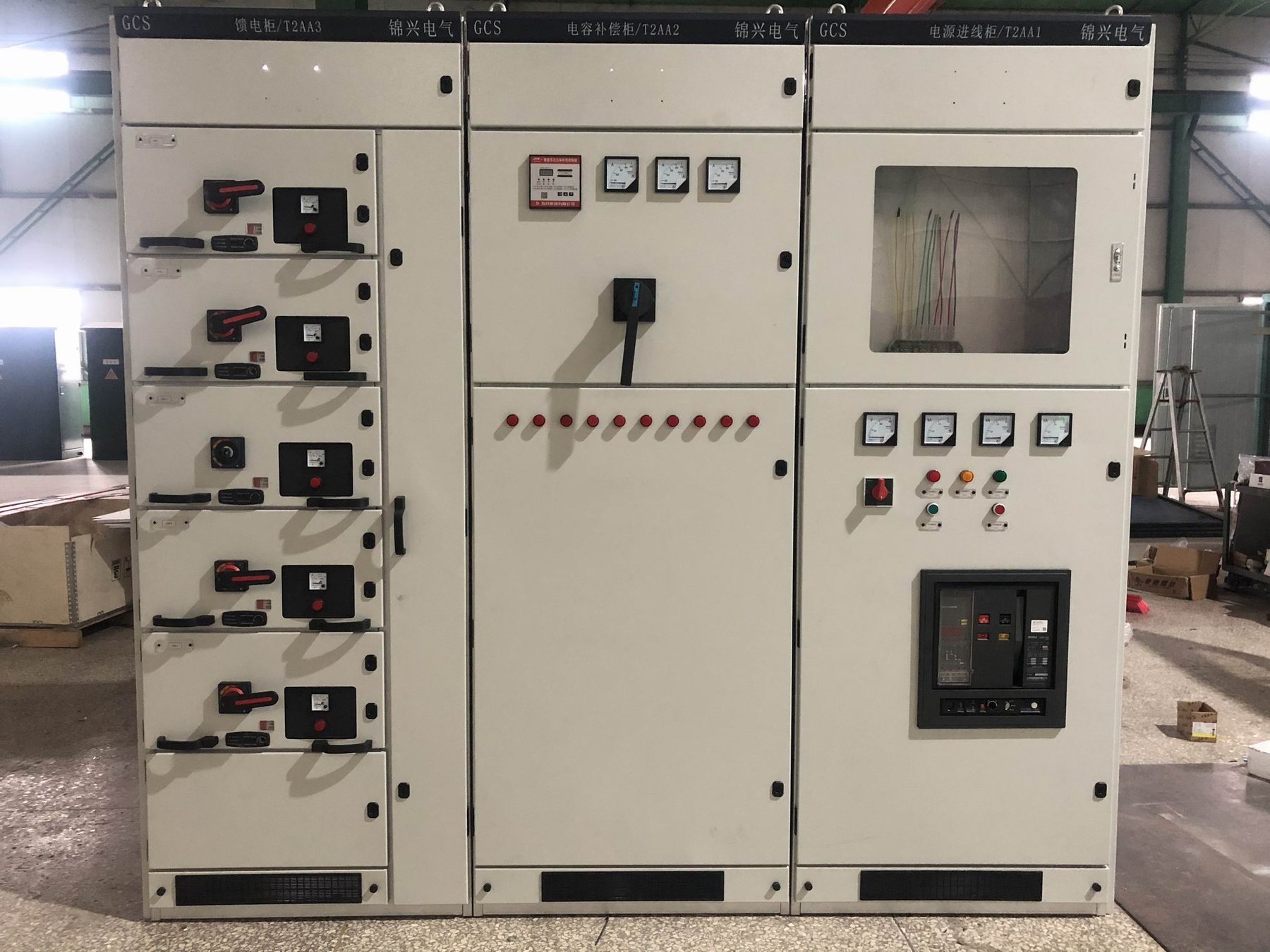
An LV panel supplying substantial single-phase electronic loads needs a neutral-current assessment as well as a phase-current rating. A balanced phase schedule does not necessarily eliminate neutral current. Before accepting a reduced neutral or requesting an oversized one, give the electrical designer the actual load composition, available harmonic measurements and expected operating combinations.
Identify the loads that use the neutral
Start by distinguishing three-phase equipment from single-phase equipment connected between phase and neutral. A building may combine motors, lighting, computers, rectifiers and UPS systems, but those loads do not all create the same neutral duty. The equipment schedule should describe connection arrangements rather than grouping every electronic device under one label.
The Electrical Installation Guide explains that triplen harmonic currents can add in the neutral instead of cancelling. This is a reason to assess neutral loading explicitly. It is not a basis for assigning the same neutral percentage to every installation containing variable-speed drives or computers.
A simple illustration of the purchasing question
Assume an illustrative, balanced set of single-phase loads produces a third-harmonic component of 20 A on each phase. Those components can contribute approximately 60 A in the shared neutral. This simplified example isolates one harmonic; it does not calculate the total current, cable size or panel rating for a real installation.
The procurement consequence is straightforward: requesting only the main incomer current omits a potentially important thermal input. Ask the designer to supply the expected phase and neutral currents for the relevant load cases, with the assumptions stated. Where measurements are unavailable, record that uncertainty before equipment is ordered.
| Project input | What the reviewer needs | Why the quotation changes |
|---|---|---|
| Load connection | Three-wire or four-wire, single-phase allocation | Identifies which loads return through the neutral |
| Harmonic information | Measurements or credible equipment data | Establishes neutral and phase heating assumptions |
| Operating diversity | Day, night and partial-load schedules | Prevents a single operating snapshot becoming the design basis |
| Future electronic loads | Planned additions and distribution | Reserves suitable terminal and conductor capacity |
| Installation conditions | Ambient, enclosure and cable arrangement | Connects conductor duty with temperature limits |
Check the complete neutral path
A larger neutral busbar does not solve a smaller termination, link or outgoing conductor elsewhere in the circuit. Compare the proposed neutral bar, terminal sizes, links, incoming connection and outgoing interfaces as one path. Confirm that the specified cables can actually be terminated without improvised adapters.
Neutral protection and switching also depend on the earthing and supply arrangement. These decisions belong in the installation design and transfer-system review. They should not be changed at cabinet assembly simply because a different protective device is easier to obtain.
Ask for thermal evidence that matches the load case
The assembly supplier needs the agreed loading assumptions to evaluate the offered construction. Ask how neutral losses are included in the temperature-rise assessment and whether the proposed arrangement differs from the design on which supporting evidence is based. A phase busbar rating alone is not an answer to that question.
For the cables outside the panel, the wiring design should address harmonic loading, installation conditions and termination constraints together. IEC 60364-5-52 addresses wiring-system selection, including cable-sizing considerations where harmonics are present. Confirm the edition and local installation rules with the responsible designer.
Information to send with the RFQ
Provide the single-line diagram, equipment schedule, neutral-current assessment and any planned expansion. Ask suppliers to state their neutral arrangement explicitly instead of leaving it as a silent default. If a proposal differs from the specified arrangement, require the reason and the affected connections to be identified.
The LV switchgear product page can be used to begin a cabinet enquiry. The decisive information is the load duty and connection design; neither a generic “full neutral” description nor an arbitrary oversizing percentage substitutes for it.