Quick answer
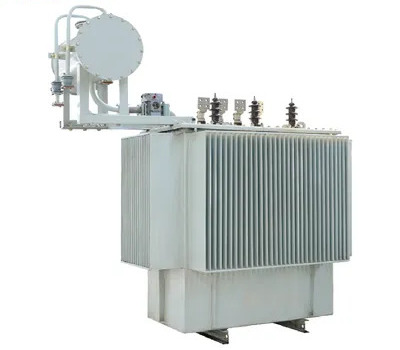
Choose an oil-immersed transformer terminal arrangement from the approved connection method, insulation coordination, clearances, cable system, access, environmental exposure and installation responsibility. Exposed bushings can suit an approved open connection, while a cable box can create a defined enclosed termination space. Neither option is automatically safer, cheaper or compatible with every site. Put the selected arrangement, dimensions, accessories, cable termination and tests in the quotation so the transformer and the upstream or downstream equipment meet at one controlled interface.
Start with the connection, not the accessory name
Ask where the transformer connects: overhead conductors, exposed busbars, screened medium-voltage cables, low-voltage busway, lugs or another project-defined system. State the side, phase arrangement, neutral requirement, cable entry direction, conductor size range and access constraints. The terminal option follows that interface; it should not be chosen because a catalogue calls one arrangement “standard.”
IEC 60076-3:2013 specifies insulation requirements and dielectric tests with reference to transformer windings and their terminals, and recommends external clearances in air where the purchaser has not specified them. It does not select a cable box, approve a site layout or define a supplier’s commercial scope. Read the IEC 60076-3 publication with the project insulation and connection requirements.
| Terminal arrangement | What it may provide | Questions that remain open | Evidence to request |
|---|---|---|---|
| Exposed bushing terminal | A defined insulated terminal for an approved external connection | Clearances, shrouds, phase spacing, cable or busbar accessories and weather exposure | Terminal drawing, insulation data and installation limits |
| Cable box | An enclosed or bounded space for the specified cable termination | Box dimensions, gland or plate, stress-control system, sealing, earthing and access | Cable-box drawing, compatible termination list and installation method |
| Separate transition or bus interface | A project-specific connection between transformer and another assembly | Mechanical movement, support, short-circuit forces and responsibility for the mating part | Interface drawing, load assumptions and approval record |
The table compares a procurement boundary. It is not a universal construction rule; the offered transformer and applicable project standard decide the final arrangement.
Check electrical and mechanical fit together
For either option, provide the highest voltage for equipment, power-frequency and impulse requirements where applicable, system earthing, fault duty, conductor arrangement and required clearances. Confirm whether the terminal is intended for a bare connection, screened cable accessory or a defined bus connection. A voltage class alone does not establish that the cable termination or bushing fits.
Then check the physical route. Record transformer footprint, terminal height, phase order, cable bending space, removable covers, lifting access, gland plate, support steel, earthing points and the direction from which the cable arrives. Include the largest termination component and the method for installing or replacing it. A cable box that fits on the drawing may still be inaccessible after the transformer is placed beside a wall.
Schneider Electric’s Minera oil-distribution-transformer catalogue lists porcelain bushings and cable boxes among product fittings and options in that product family. This is a manufacturer-specific example of why the terminal arrangement must be selected with the transformer configuration; it is not evidence that every Jinxing transformer offers the same options. See the Schneider Minera catalogue.
Define the cable-box boundary precisely
“Cable box included” can describe several different scopes. Ask whether the supplier provides the box enclosure, gland or entry plate, internal support, stress-control or termination accessories, phase barriers, earthing links, sealing parts, test points and covers. State which cable and termination are supplied by the transformer manufacturer, cable contractor or switchgear supplier. If a termination is supplied loose, record its storage, installation and test responsibility.
For exposed bushings, record the interface beyond the porcelain or composite insulator. The external connector, conductor, surge protection, support, shroud and weather screen may belong to another package. Request a terminal drawing that marks the factory boundary and the purchaser’s mating point. Do not assume the bushing hardware includes the external cable lug or the complete connection assembly.
Include testing and maintenance access
The terminal arrangement affects factory inspection, site installation and future maintenance. Ask the supplier to identify the applicable routine or agreed special tests, inspection points, torque records, sealing checks and any cable-termination test that another contractor must perform. The test plan must follow the approved specification; this article does not prescribe a universal test list.
Describe how the operator will isolate, inspect and replace the connection. A cable box may improve physical segregation but require removal of covers and more working space. An exposed bushing may be easy to inspect but require a controlled clearance and weather arrangement. Record the isolation, access and lifting assumptions in the layout review rather than leaving them to site installation.
The existing oil-immersed transformer accessories checklist covers the broader accessory package. The 33kV transformer selection guide discusses voltage and terminal inputs; this article focuses on the bushing-versus-cable-box decision and the contract interface. Use the oil-immersed transformer page to identify the product family, then send the approved connection drawing through the transformer quotation page or project enquiry page.
Example: a replacement transformer in a cable room
Imagine a replacement transformer whose existing feeder arrives from below through a narrow cable room. An exposed bushing may leave the termination and weather protection to another package; a cable box may provide a more defined enclosure but require a new gland plate, bending radius and access route. The buyer should request both arrangements only if the offered design supports them, then compare the complete connection scope, footprint, tests, outage work and exclusions. The price difference has meaning only when both offers terminate at the same approved boundary.
RFQ checklist
- Connection type, side, phase order, neutral and cable or bus arrangement.
- System voltage, insulation levels, fault duty, earthing and applicable project standard.
- Selected terminal: exposed bushing, cable box or another documented interface.
- Terminal dimensions, clearances, phase spacing, entry direction and bending space.
- Box, gland plate, stress-control parts, lugs, shrouds, barriers and earthing scope.
- Factory-fitted, supplied-loose and field-installed items with responsible parties.
- Routine, site, cable-termination and integrated tests with acceptance records.
- Access, isolation, lifting, maintenance and replacement assumptions.
FAQ
Is a cable box always better than exposed bushings for an oil transformer?
No. The suitable arrangement depends on the approved connection, insulation, environment, access, cable system and responsibility split. Compare complete interfaces rather than the accessory name.
Does a cable box include the medium-voltage cable termination?
Not automatically. The quotation should identify the box, entry hardware, stress-control parts, termination, cable and installation boundary item by item.
Can an existing cable be connected to any transformer bushing of the same voltage class?
No. Connection geometry, insulation, conductor, interface accessories, clearances and installation method must be confirmed for the offered transformer and cable system.