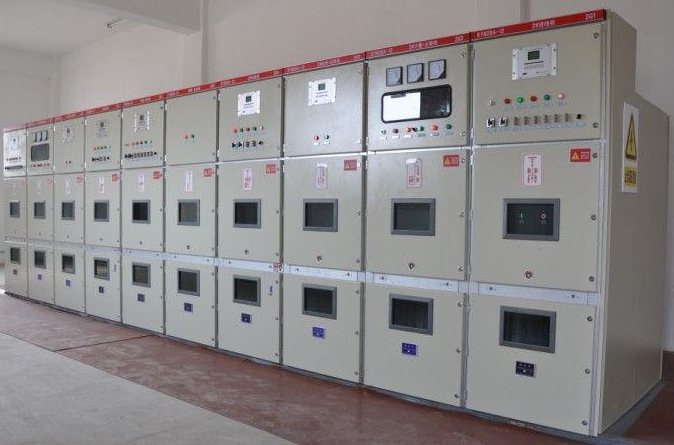
Choose between a switch-fuse combination and a circuit-breaker feeder by reviewing the transformer protection duty and network coordination. Transformer capacity alone is not a complete selection rule. The buyer needs the proposed protection characteristics, operating requirements and available evidence for the particular feeder arrangement.
Start with the transformer and network data
Give the reviewer the transformer rating, primary and secondary voltages, impedance information and available inrush data. Include the upstream protective device, available fault-current information and the downstream protection arrangement. State whether the transformer has temperature or other protective contacts that need to initiate an MV trip.
A request for an RMU with “transformer protection” leaves these decisions open. It does not specify which faults should be cleared, which device should operate first, or how the equipment responds to non-electrical trip signals. Those responsibilities should be resolved before the panel configuration is finalized.
| Selection issue | Switch-fuse proposal to review | Circuit-breaker proposal to review |
|---|---|---|
| Coordination | Fuse characteristics and switch-fuse combination suitability | Relay functions, settings range and breaker duty |
| Transformer energization | Compatibility with the transformer inrush requirement | Inrush behaviour considered in the protection settings |
| External trip signals | Available trip arrangement and interface | Trip inputs, auxiliary supply and supervision |
| Post-operation maintenance | Replacement fuse availability and access | Investigation, reset and maintenance requirements |
| Future transformer change | Need to reassess fuse and combination selection | Need to reassess settings, sensors and breaker rating |
Compare the complete protection arrangement
IEC 62271-105 addresses alternating-current switch-fuse combinations. The purchasing question is whether the proposed combination and fuse selection suit the application, rather than whether an isolated fuse or switch has an impressive rating.
For a circuit-breaker feeder, ask which protection relay or release is included, what current sensing is provided and how trip energy is supplied. A breaker without a fully specified protection arrangement does not establish the desired transformer protection. State which auxiliary supplies must remain available during the fault conditions the scheme is intended to clear.
Example: a transformer with an external temperature trip
Consider an illustrative transformer whose project protection scheme requires an external temperature contact to initiate an MV trip. Two RMU quotations appear comparable by voltage and panel count. One describes only the power switching function, while the other includes the required trip interface and its auxiliary supply.
The correct comparison is to ask both suppliers to show how the temperature signal reaches the switching device and how the interface is verified. This does not mean every such project necessarily requires a circuit breaker. It means the signal and operating duty must be accounted for in the actual proposed arrangement.
Make the coordination review visible
Request the relevant curves or settings information and identify who performs the coordination study. The study should consider transformer energization, transformer fault protection and discrimination with adjacent devices. The buyer should receive a clear record of the accepted protection approach and any unresolved network information.
A future increase in transformer capacity is another reason to document the original assumptions. It can affect the acceptable protection choice even when the RMU busbar rating does not change. Ask whether the expected upgrade can be accommodated and which components or settings would need a fresh review.
Include operating support in the commercial comparison
For a fuse-based arrangement, ask about the specified fuse type, replacement availability and manufacturer-defined replacement practices. For a breaker-based arrangement, include relay configuration records, testing interfaces, auxiliary supplies and service support. Neither option should be ranked on the initial switching device price alone.
Use the ring main unit range to discuss the required transformer feeder. Submit the transformer datasheet and source protection information with the enquiry. The order should name the accepted protection arrangement, required interfaces and evidence schedule, giving the installation team a defined scheme instead of a panel whose protection must be decided after delivery.