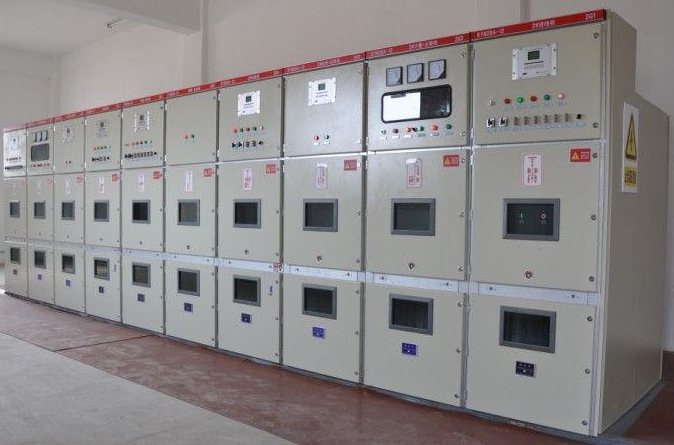
Separate insulation from interruption
Solid insulation describes how insulating material is used around primary parts. Vacuum interruption describes the medium in which a switching arc is interrupted. They answer different questions and can appear together in one switchgear design.
An enclosure can contain several dielectric interfaces: moulded insulation, air clearances, cable connectors and other compartments. A buyer therefore needs the actual construction description. Do not infer that every part is fully encapsulated, that the complete assembly contains no gas, or that all accessible surfaces have an earthed screen merely from the phrase “solid insulated.”
This page is a technology review guide. Jinxing's availability of any specific solid-insulated RMU structure, rating or verified arrangement remains subject to project review; a generic RMU page is not proof of that construction.
Ask for a construction-level comparison
| Question | Evidence to request | Claim it cannot replace |
|---|---|---|
| Which parts use solid dielectric material? | Section drawing or written primary construction description | A broad product family name |
| Where does interruption occur? | Switching-device identification and rated duty | The insulation medium alone |
| How is isolation established? | Indication, interlock and operating documentation | A claim that vacuum interruption provides visible isolation |
| How are cables and bus interfaces connected? | Interface drawings and approved accessories | Similar external dimensions |
| What site conditions are permitted? | Temperature, humidity, altitude and pollution limitations | “Suitable for all environments” |
| What has been verified? | Test scope linked to the offered configuration | A report for another enclosure or assembly |
This comparison helps expose differences between two proposals that otherwise use the same technology label.
Treat interfaces as part of the insulation system
A cable connector is not selected only by nominal voltage. Its mating interface, current duty, cable dimensions and installation requirements must match the offered bushing system. Likewise, an extension connection must be reviewed for the specific assembly.
For example, two compact units might have similar cabinet width but different connector geometry and cable access. An existing cable may not reach the new termination without violating its permitted arrangement. Request a coordinated cable and equipment drawing before accepting a replacement as mechanically equivalent.
Evaluate serviceability without absolute promises
“Maintenance-free” is too broad unless the supplier defines what it excludes. A design may reduce attention to sealed primary parts while still requiring inspection of mechanisms, secondary equipment, terminations or environmental protection. Ask for the manufacturer's actual service instructions and the tasks the owner must retain.
Also identify the consequence of a damaged insulating module. Can the affected function be repaired or replaced, under what isolation conditions, and with what equipment access? The quotation should explain the proposed service route rather than assuming that every technology supports the same field repair.
Keep environmental and test claims specific
If the project requires a particular gas restriction or environmental declaration, ask for the exact statement and supporting documentation covering the supplied assembly. Do not transfer an environmental claim from an unrelated manufacturer's solid-dielectric product.
Similarly, internal-arc classification and accessibility depend on the tested arrangement and installation conditions. They should be reviewed separately from the material used for insulation. A change in cable compartment or exhaust arrangement may require additional scrutiny.
Send the required primary functions, cable interface data, site environment and evidence requirements through project enquiries. Use ring main units to start the discussion, explicitly requesting confirmation of whether a suitable solid-insulated configuration can be proposed.