Quick answer
Before ordering replacement switchgear around existing cables, obtain a verified cable and termination survey. Review the connection as a complete interface: cable construction and condition, accessory selection, terminal geometry, available length, support and earthing arrangement. Keep reuse, retermination and replacement as explicit alternatives until the evidence supports a choice.
Identify what is actually installed
Start with records and a survey planned by qualified site personnel under appropriate isolation arrangements. Collect cable identification, conductor material, insulation and screen construction, core arrangement, accessory identification and photographs that can be tied to each feeder. Record uncertainty rather than guessing from cable colour or approximate diameter.
Cable accessory manufacturers specify more than conductor size. TE Connectivity's shielded-cable termination catalogue, for example, lists insulation diameter and installed dimensions alongside conductor range. Those product-specific ranges show why cross-section alone is insufficient; they do not establish suitability for a different accessory or installation. TE termination selection data.
Compare three connection options
| Option under review | Evidence needed before acceptance | Main project dependency |
|---|---|---|
| Retain the existing cable and accessory | Accepted condition and verified compatibility with the new terminal | Supplier and accessory review of the actual interface |
| Retain cable with a new termination | Cable data, usable length and an approved accessory arrangement | Retermination space, outage and qualified installation work |
| Replace or extend the cable | Engineered cable route and connection design | Additional materials, civil interfaces and programme |
These are decision paths, not automatic permissions to reuse equipment. The responsible designer and accessory manufacturer should define the applicable acceptance requirements.
Overlay the old and new geometry
Request a dimensioned section of the proposed cable compartment and compare it with surveyed entry positions. Show the actual connection height, phase arrangement, support points and the space occupied by the complete termination. Include surge arresters or other components that share the compartment.
A new panel can have a similar external width while placing its terminals differently. The cable may then need a different approach angle or more usable length. Ask for a marked interface drawing that resolves these differences before the switchgear design is frozen.
The drawing should also identify which party supplies any new lugs, connectors, clamps, glands and screen bonding components. Avoid a gap where the panel supplier assumes the termination contractor will provide an adapter that has never been designed.
Example: a feeder fits on paper but is too short
In a hypothetical retrofit, the existing cable size falls within the proposed accessory's conductor range. The replacement panel drawing later reveals a higher terminal position, while removal of the old accessory would consume part of the available cable end.
The initial size match therefore does not resolve the retrofit. The buyer needs a reviewed connection option and an updated outage plan before ordering. A revised panel arrangement, another engineered cable solution or cable replacement may be considered, but none should be assumed feasible without technical review.
Record the chosen option per feeder. Different feeders in the same lineup may have different cable ages, lengths and termination types.
Make uncertainty visible in the quotation
If the survey cannot be completed before tender, state which dimensions are provisional and price the unresolved work separately. Identify the survey decision date and the manufacturing details held pending confirmation. Include responsibility for the final accessory selection and accepted installation documentation.
Request an outage scope that distinguishes disconnection, inspection, new termination work and the agreed post-work acceptance. This helps the owner compare quotations with the same practical assumptions.
Information to send for interface review
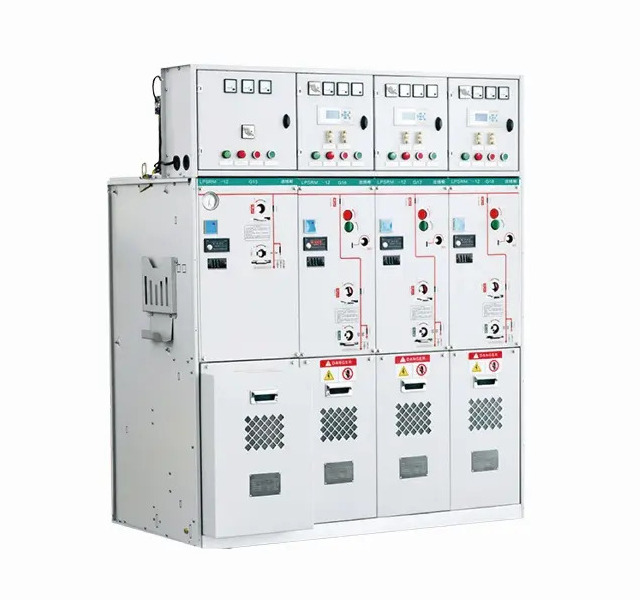
When discussing medium-voltage switchgear or a 12kV outgoing panel, provide the existing cable schedule, verified connection dimensions, accessory details and proposed replacement arrangement.
Use the project enquiry page to request a technical compatibility review. Retrofit suitability and any reused components require confirmation; a standard product page does not establish compatibility with an existing installation.