Quick answer
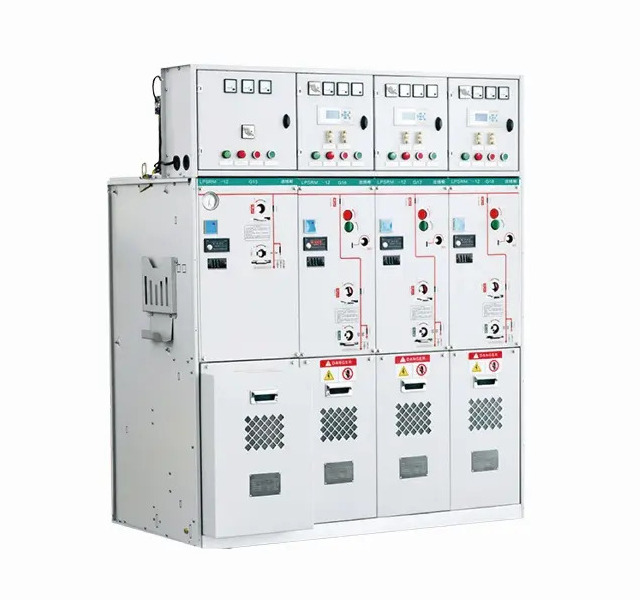
State exactly what “spare panel” means in the purchase order. It may mean a fully equipped unused feeder, an enclosure prepared for later equipment, or empty site space for another panel. Those options preserve different capabilities and create different future engineering and outage obligations.
Compare the installed provisions
| Option | What the first order should identify | What remains for the future |
|---|---|---|
| Fully equipped spare feeder | Actual switching device, measurement, protection and auxiliary components | Final feeder application and any changed settings or connections |
| Prepared panel | Installed bus interfaces, barriers, wiring provisions and omitted components | Verified compatible equipment and completion work |
| Reserved extension space | Extension side, physical envelope and proposed bus connection concept | Detailed panel engineering, interface work and system review |
Request an itemised component schedule for each option. A drawing labelled “spare” cannot show whether a circuit breaker, CTs, relay, cable supports or auxiliary wiring are included.
Check compatibility beyond the cabinet size
Future extension depends on the existing assembly's bus arrangement, physical interfaces, ratings and design evidence. ABB's switchgear extension service describes site assessment and engineered direct or adaptation-panel connections. It is a useful example of extension as an engineering task, not a promise that any two panels can be joined. ABB extension engineering overview.
Ask the supplier to identify which documents and interface details must be retained. Include the original assembly drawings, actual component identities and the proposed extension arrangement. Do not treat a shared model family name as sufficient proof of future compatibility.
Define the future feeder before selecting the provision
The buyer may know the expansion location without knowing the future load. Record both the known requirements and the uncertainty. A spare feeder selected for one duty may require changes if the future application has different protection, measurement, control or cable needs.
For the reserved-space option, ask which side can be extended and how the end configuration is intended to change. Identify any dependencies on access, foundation interfaces or adjacent equipment. Keep the agreed extension reservation visible on the owner's site records so that another project does not occupy it.
Example: two offers use the same word differently
In a hypothetical tender, one bidder includes a fitted spare outgoing feeder. Another includes an empty panel shell with selected provisions. Both descriptions use “one spare panel,” but the second price leaves major components and engineering for later.
The buyer should compare a common scope table, including the missing equipment, later installation work and assumed shutdown. If the future feeder is uncertain, either option may be reasonable; the decision needs a transparent account of what is being reserved and what is being purchased now.
Ask the owner to identify the last responsible decision date. A near-term confirmed expansion may justify completing more of the feeder initially, while a remote possibility may justify a different provision. The engineering review should support that commercial choice.
Include the future system review
Adding a feeder can affect more than the end panel. The future design may require review of loading, fault duty, protection coordination, auxiliary supply and control interfaces. Record these reviews as dependencies, rather than presenting the spare provision as unconditional permission to expand.
Also document outage assumptions. A proposal for later extension should identify what equipment is expected to be unavailable and which details must be confirmed in the future work plan. It should not promise live extension or uninterrupted production without an applicable engineered basis.
Preserve evidence at handover
Request a final schedule distinguishing installed, supplied loose and reserved items. Include storage and maintenance requirements for any unused supplied components and the references needed to identify them later. Future buyers should be able to reconstruct the actual provision from the handover package.
When discussing medium-voltage switchgear or a 12kV outgoing panel, send the future feeder assumptions and preferred procurement options through the project enquiry page. Extension compatibility, component scope and supporting evidence require technical confirmation for the proposed assembly.