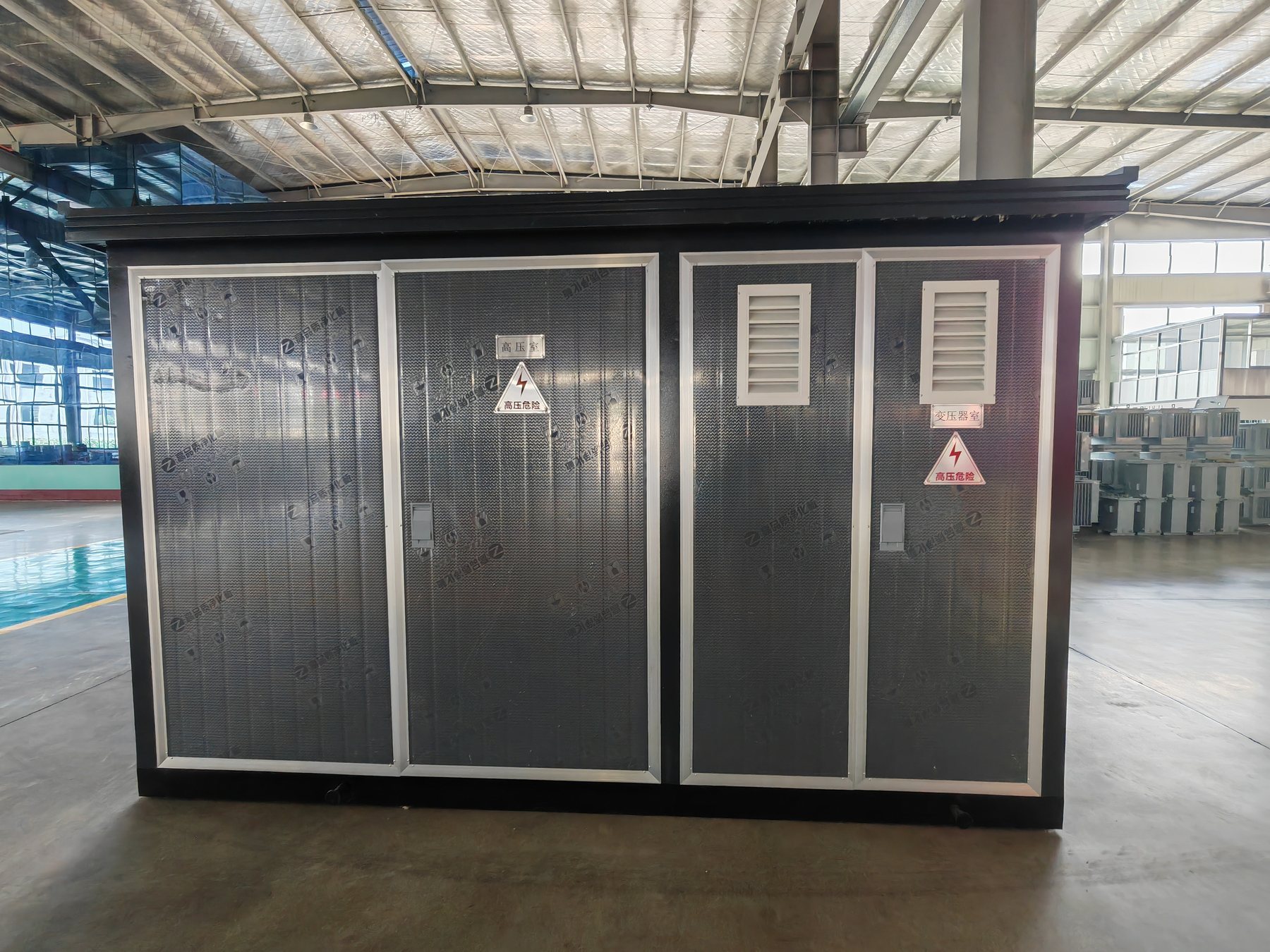
Quick answer
Approve a compact substation’s equipment-removal route before the enclosure drawing is frozen. The supplier should show the largest removable component, clear door opening, panel or roof sections that may be removed, lifting points, turning space, floor route, cable disconnection boundary and the equipment needed to move it. Operator access and emergency access do not prove that a transformer or switchgear section can be replaced. A catalogue footprint is therefore not an equipment-removal plan.
Separate daily access from replacement access
Use different drawing marks for four situations: normal operation, emergency response, maintenance and removal of the largest component. A person may be able to enter the enclosure while a transformer, cable box or switchgear section cannot pass through the same opening. Record the removal route from the final position to the site lifting or loading point, including any temporary fencing, road closure or crane setup.
| Access case | What the buyer should confirm | Evidence to request |
|---|---|---|
| Normal operation | Can operators reach controls, indicators and working positions safely? | Operating plan and aisle drawing |
| Maintenance | Can covers, fuses, relays or service parts be reached and removed? | Maintenance clearances and service procedure |
| Equipment replacement | Can the largest specified transformer or functional unit leave the enclosure? | Removal sequence, clear opening and lifting route |
| Emergency or authority access | Can responders and inspectors reach the required areas under site rules? | Site plan and authority comments |
IEC 62271-202:2022 covers enclosed high-voltage prefabricated substations and includes requirements related to access doors and free operating aisles. It provides a product-standard context, not a project-specific route or a guarantee that any Jinxing package meets a chosen site arrangement. See the IEC 62271-202 publication.
Request the shipping and operating drawings together
Ask for at least two states: the delivered enclosure and the operating enclosure. The drawings should identify shipping sections, removed panels, temporary braces, doors, lifting points, removable roofs or walls, transformer rails, cable connections and any component that must be disconnected. Compare the packed route with the installed route; a door may be wide enough for a person but narrower than the packed transformer or a lifting frame.
Do not infer a removable roof or wall from a bolted line on an illustration. Request the supplier’s approved removal method and the conditions under which it is allowed. Note whether removal requires de-energization, draining, cable disconnection, lifting equipment, a special tool or a qualified service team. Those assumptions belong in the quotation boundary.
An ABB PowerIT compact secondary substation manual includes lifting instructions for moving a distribution transformer into its transformer compartment. This is a manufacturer-specific handling example; its lifting points, sequence and equipment do not establish a Jinxing method. Use it to prompt a request for the offered package’s own instructions. See the ABB compact secondary substation manual.
Check the largest component and the fixed interfaces
List the heaviest or widest component that may need replacement: transformer, MV functional unit, LV assembly, cable box, auxiliary cabinet or another project-defined item. Record its shipping dimensions, operating dimensions, weight, centre of gravity when supplied, lifting points, support method and required clearance. If the supplier cannot identify the component, leave the removal assumption open rather than approving a generic door size.
Coordinate the route with interfaces that cannot move after installation. These may include MV and LV cable entries, earthing, ventilation openings, fire barriers, oil containment where applicable, foundations, drainage, fences and overhead lines. A route that works before cables are installed may be blocked by the final trench or termination. A proposed crane position may also conflict with the site’s electrical clearances or public access rules.
The existing compact substation fire and access review covers authority, emergency and general site access. The compact substation cable-entry guide and foundation design checklist cover related civil interfaces; this article focuses on the supplier’s equipment-removal envelope and replacement sequence. Use the Jinxing compact substation page and YB prefabricated substation page to identify the product family, then send the route drawing through the project enquiry page.
Define responsibility for a future replacement
The initial order should state who disconnects cables, isolates and drains equipment where applicable, removes panels, supplies lifting gear, protects adjacent equipment, reinstalls covers, reconnects services, performs tests and accepts the work. “Replacement by others” is too broad when the enclosure is a package with proprietary lifting or sealing steps.
Describe the expected replacement condition. If the future unit is a different rating, terminal arrangement or cooling method, the route and openings may need a new engineering review. If a panel or roof section is removed, record how weather sealing, fire separation, IP performance and structural integrity are restored. Do not promise that future replacement is possible simply because a substation has a large door.
Example: an outdoor solar collector substation
Suppose a solar collector substation fits the foundation but the access road turns sharply beside a fence. The buyer should compare a front-door removal route with a side-panel or roof-lift arrangement, including the transformer shipping package, crane reach, cable disconnection, temporary works, public protection and reinstatement checks. The preferred option is the one that leaves a documented, practicable route for the largest component without compromising the operating enclosure.
RFQ checklist
- Normal, maintenance, emergency and equipment-removal access cases.
- Delivered and operating drawings with doors, panels, roof sections and temporary braces.
- Largest removable component, packed/operating dimensions, weight and lifting points.
- Turning radius, floor route, crane or handling equipment and site clearances.
- Cable, earthing, ventilation, fire, drainage, foundation and fence interfaces.
- Isolation, disconnection, lifting, sealing, reassembly and test responsibilities.
- Conditions for future replacement and engineering review of a different unit.
- Handover records proving the accepted removal route and reinstated enclosure.
FAQ
Does a personnel door prove that a compact substation is replaceable?
No. The largest component, packed dimensions, lifting method, route and temporary works must be checked separately from daily operator access.
Can the supplier choose the door size from the enclosure footprint?
No. Door and removal dimensions depend on the actual components, shipping condition, lifting equipment, cable interfaces and site route. Request a drawing for the offered configuration.
Is future equipment removal part of the initial substation price?
Not automatically. The quotation should state the installed access provisions, excluded temporary works, future disconnection and testing responsibilities, and any assumptions about a replacement unit.