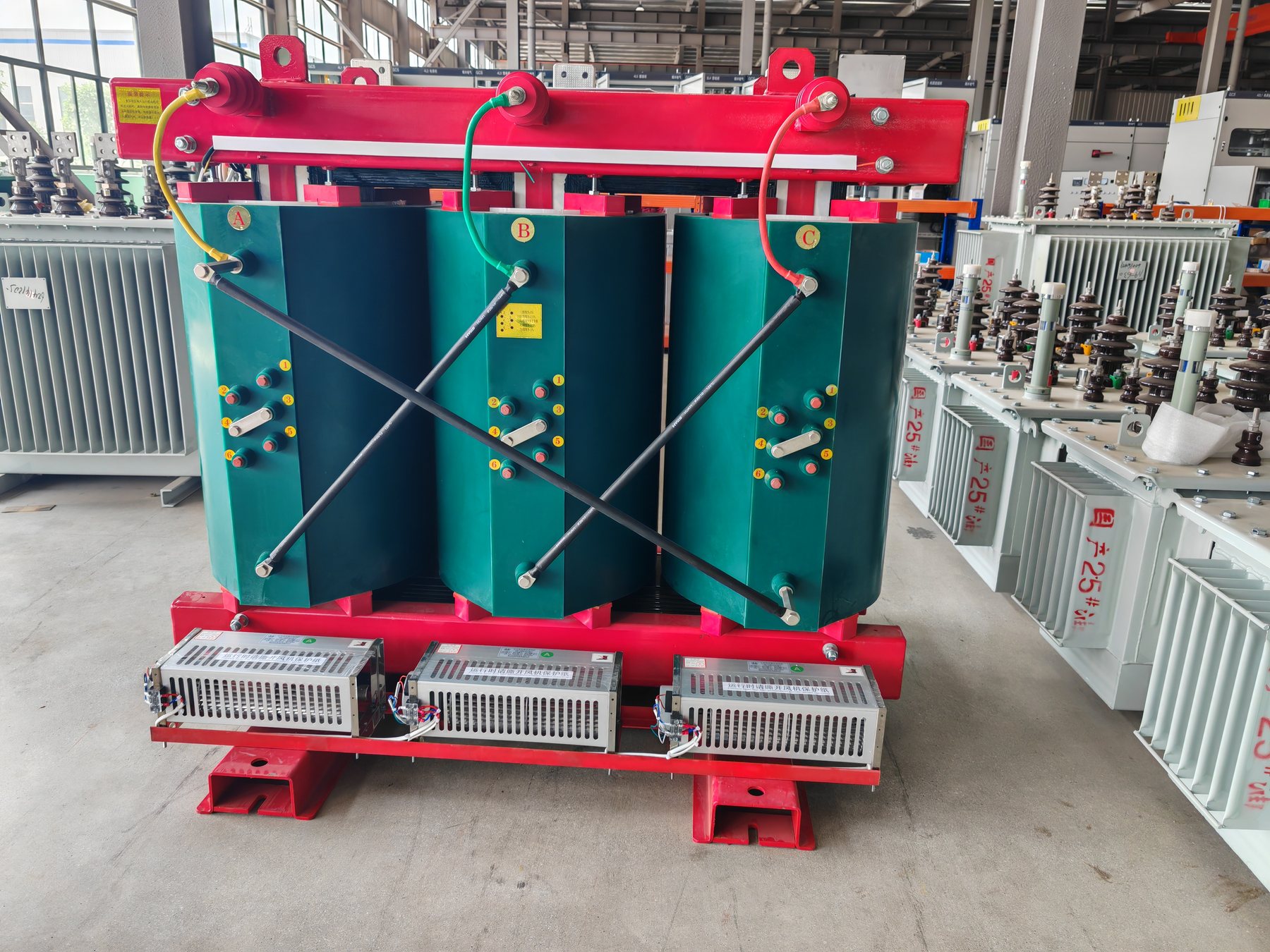
Do not treat fitted fans as a universal rating increase
Two transformer offers may show the same natural-air rating but different statements about forced cooling. One may permit a defined temporary duty; another may offer a separately declared operating rating. The purchase comparison needs the supplier’s actual rating schedule and conditions, not a general percentage increase associated with fans.
A manufacturer example in Schneider Electric's forced-ventilation guidance shows that fan cooling must be considered alongside cables, protection and room ventilation. Its stated uplift applies to that product and is not a Jinxing performance commitment.
Request a two-state capacity schedule
| Operating state | Supplier information | System-design check |
|---|---|---|
| Natural air | Declared rating, ambient, enclosure and installation conditions | Can essential demand be carried without fans? |
| Fans operating | Declared available loading and permitted duration | Do terminals, cables, busway and switchgear support that duty? |
| Fan supply unavailable | Required operating response and alarm interface | Which loads are shed, and who initiates it? |
| High ambient or restricted room cooling | Applicable limitations and heat rejection | Can the room remove the expected heat? |
| Maintenance state | Isolation and access provisions for the fan system | Can the plant operate within the remaining declared capability? |
Use explicit units and time periods. A quotation stating overload available leaves unanswered how much load is allowed, for how long, at what initial temperature and under which cooling conditions. Ask for those conditions before the purchasing team assigns commercial value to the higher figure.
Example: a peak load becomes a continuous requirement
Imagine an offered transformer has a hypothetical natural-air rating of 1,000kVA and a supplier-declared fan-assisted duty of 1,250kVA under specified conditions. The plant initially expects a short peak. During design development, the process team changes the demand to continuous operation above 1,000kVA.
That change should reopen selection. The higher number cannot automatically become the normal design rating if the offered fan-assisted duty was time limited. Ask the supplier to assess the revised duty, and compare a larger natural-air design with an explicitly suitable fan-assisted design. These figures illustrate the decision and do not describe a Jinxing model.
Specify the auxiliary and control interfaces
Document the fan supply voltage and frequency, source of auxiliary power, control panel scope, operating mode and alarm contacts. Identify what happens when the auxiliary supply fails even while the transformer remains energized. Where remote monitoring is required, define the contact functions or communication points rather than merely writing BMS connection.
The control sequence should distinguish temperature alarm, cooling initiation, fan failure and protective trip functions where these are provided. The designer and supplier should agree settings and responsibilities. The purpose of this enquiry is to define the required functionality, not to prescribe field settings from a generic article.
Include maintainability in the purchase comparison
Ask for fan model identification, replacement access, recommended spares and maintenance instructions. Compare any added sound and auxiliary consumption under the stated operating conditions. A spare fan that cannot be replaced within the site’s access constraints may not deliver the expected continuity benefit.
Send the load profile, room conditions, enclosure requirement, available auxiliary supply and desired response to cooling loss with a dry-type transformer enquiry. Require the final data sheet and operating instructions to use the same rating language as the quotation. The accepted loading should remain traceable to the specific transformer, cooling arrangement and project duty.