Quick answer
Request a panel-by-panel label schedule and front-elevation artwork tied to the approved single-line diagram. Agree equipment identifiers, feeder descriptions, language, symbols and drawing revisions before labels are manufactured. Review physical markings separately from control logic: an accurate diagram does not prove that interlocks or remote commands operate correctly.
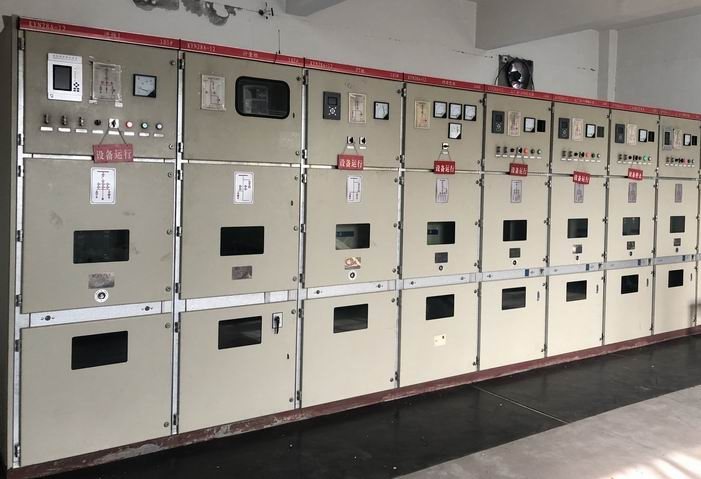
!Jinxing medium-voltage switchgear product photograph
Identify which markings the quotation includes
A switchgear front can contain equipment identification, feeder descriptions, a mimic diagram, position indicators and safety markings. These serve different purposes. A contract entry that says “labels included” leaves their content, material and approval responsibility unclear.
ABB's SafeRing/SafePlus manual illustrates a product-specific front arrangement in which the main-circuit mimic and switching-device position indicators appear on the front covers. The example shows why artwork must be coordinated with physical equipment. It does not establish the arrangement supplied on a Jinxing panel. See ABB's switchgear design description.
Ask each bidder to identify the markings included in its offer and provide a proposed review format. Distinguish fixed manufacturer markings from project-specific labels. Changes to safety text or equipment ratings require the relevant manufacturer's and designer's review; they should not be treated as ordinary copy-editing requests.
Create one controlled label schedule
Use a stable panel identifier to connect the label list with the single-line diagram, general arrangement and feeder schedule. Keep that identifier separate from a descriptive name that may change when a tenant or process area is renamed.
| Schedule field | What the buyer supplies or approves | What the supplier returns |
|---|---|---|
| Panel identifier | Unique equipment tag and project convention | Matching identifier on artwork and drawings |
| Feeder description | Approved destination or service description | Proposed wording, line breaks and label position |
| Diagram reference | Controlling single-line revision and relevant circuit | Front-elevation mimic artwork for that panel |
| Language | Required languages and approved technical terms | Actual artwork with characters and layout visible |
| Label construction | Applicable environment and owner requirements | Proposed material, marking and fixing method |
| Delivery evidence | Review and inspection requirements | Final schedule and agreed photographic records |
Specify the drawing perspective as well. A lineup numbering sequence viewed from the front can be misunderstood when someone reviews a rear cable-entry plan. Put the viewing direction on the applicable drawing and resolve inconsistent orientation labels before approval.
Review the mimic as installed artwork
A project single-line diagram can include equipment outside the purchased lineup. The panel mimic needs an agreed boundary showing what its symbols represent. Ask the designer to identify any external connection references and the supplier to explain how the artwork relates to the actual panel configuration.
Review the front elevation at a usable scale. Check whether a long feeder description hides a symbol, whether adjacent identifiers can be confused, and whether the proposed mounting location obstructs an indicator or required access. A spreadsheet with correct words cannot demonstrate that the finished arrangement is legible.
Where colours or symbols have an owner-defined meaning, attach the approved convention. Do not assume one supplier's default colour has the same meaning on another site. Any apparent conflict with the equipment's own required markings should be resolved through the technical review.
Example: the circuit is unchanged but its name moves
In a hypothetical industrial project, the initial feeder schedule identifies two panels by production-area names. Before delivery, the owner renames one area and moves a process function to another building. An email requests replacement feeder labels, but the cable schedule still uses the original destination descriptions.
A label-only correction would leave several documents describing the same circuit differently. The buyer should identify the stable equipment tag, confirm the actual destination, and update the affected records together. If the electrical arrangement also changed, the engineering review must address that change before approving the artwork.
The example concerns purchasing and document consistency. It provides no switching instructions and does not establish that a renamed circuit is correctly connected in the field.
Include language and future replacement needs
For export projects, have the owner approve technical translations rather than relying on a general translation of a feeder nickname. Show the exact text, including abbreviations and special characters, in the approval proof. Agree which language controls if the contract uses more than one.
Ask who retains the final label schedule and how replacement labels can be ordered. Record the accepted material and artwork reference. The owner should be able to replace a damaged label with the correct information without reconstructing the text from an old photograph.
For prepared or spare panels, make the supplied condition explicit. A future-use description must not suggest that omitted equipment is already installed. Coordinate that description with the actual component schedule and accepted arrangement.
Set a focused factory review
Request a check that each supplied panel matches the approved label schedule and front-elevation revision. The agreed record can identify the panel, relevant artwork revision, observed discrepancy and closure. Photographs should make the text and associated equipment identity readable.
This review complements the switchgear interlocking schedule and SCADA signal-list review. It cannot replace their functional acceptance. Matching words on a cabinet and a remote screen do not by themselves verify the signal mapping or equipment response.
RFQ checklist and next step
For a medium-voltage switchgear quotation, provide the panel schedule, controlled single-line diagram, naming convention, languages, installation environment and desired approval records. Identify the owner responsible for resolving text and symbol questions.
Review the proposed KYN28-12 configuration and send these documents through the project enquiry page. Request an itemized response covering artwork preparation, label manufacture, revisions and final records. Available marking options and their suitability require confirmation for the offered assembly.
FAQ
Is a mimic diagram an operating procedure?
No. It represents an agreed circuit arrangement. Operators need the manufacturer's instructions and the site's approved operating procedures; artwork alone does not authorize an action.
Can the supplier translate feeder names?
The supplier may propose text, but the project owner should approve technical meaning and identifiers. Include the actual translated artwork in the review rather than approving only an English spreadsheet.
Do correct labels prove that the wiring is correct?
No. Identification review and electrical or functional verification answer different questions. Require the applicable acceptance records for each, linked to the actual supplied panels.