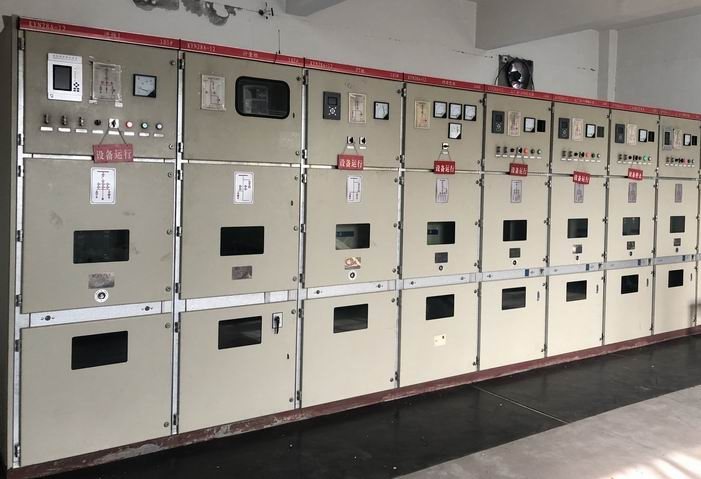
Select the feeder assembly, not one current number
A vacuum circuit breaker interrupts an arc inside a vacuum interrupter. Its continuous-current rating describes one aspect of duty; it does not identify all the fault and switching conditions that the breaker must withstand.
Begin with the network study and transformer data. Establish the circuit voltage, frequency, insulation requirements, maximum load and prospective faults at the breaker location. Then review the breaker, current transformers, primary connections, earthing provisions and enclosure as an assembled feeder.
This guide concerns a VCB configured within switchgear. It does not establish separate breaker supply or imply that every breaker option is available in a published cabinet family.
Keep ratings with different meanings separate
| Parameter | What it addresses | Procurement question |
|---|---|---|
| Rated normal current | Carrying load under the stated conditions | Is the complete panel suitable for the actual service environment? |
| Short-circuit breaking duty | Interrupting the specified fault current | Does the proposed device cover the studied current and associated conditions? |
| Short-circuit making duty | Closing onto a fault | Is the required peak duty covered? |
| Short-time withstand | Carrying fault current for a defined duration | Is the duration consistent with the protection scheme? |
| Operating sequence | Defined opening and closing duty | Does it match the permitted network operation? |
| Recovery and switching conditions | Voltage and transient stresses associated with interruption | Are unusual application conditions identified for review? |
Do not substitute a peak current for an rms breaking-current requirement or omit the time from a short-time withstand specification. These figures are not interchangeable catalogue labels.
Example: adequate load current, unresolved fault duty
Consider two proposed feeder assemblies that both carry the transformer load. If one proposal omits its fault-breaking rating or withstand duration, its higher normal-current value does not resolve the omission.
Ask for a completed rating schedule and compare it with the fault study. Where an alternative breaker is proposed, require confirmation that the assembled panel and its connections remain suitable. The breaker data alone cannot establish the complete switchgear rating.
Distinguish switching stress from protection settings
Transformer energization can produce magnetizing inrush, and switching arrangements may require application-specific transient review. The network designer should identify unusual cable arrangements, frequent switching or other conditions requiring the supplier's assessment.
Protection settings must also distinguish permitted operating behavior from faults, but that is a separate engineering task. Use the switchgear protection-relay selection guide to define the required functions, inputs and settings responsibilities, including the review of transformer energization behavior. This article does not prescribe pickup values, time delays or an automatic reclosing sequence for a transformer feeder.
Review the operating and physical interfaces
Identify fixed or withdrawable construction, approved interlocks, mechanical access and the interface to the trip and close circuits. For replacement work, check exact primary contact geometry, auxiliary connections and compartment compatibility; similar dimensions do not prove interchangeability.
Record expected switching frequency and required maintenance information. The owner should know which counters, inspection records and replacement criteria accompany the selected device. Do not turn a catalogue mechanical-endurance figure into a maintenance interval without the applicable instructions.
Provide the transformer datasheet, fault study, operating scheme, protection requirements, environment and cabinet arrangement through project enquiries. Review medium-voltage switchgear and the KYN28 panel page as candidate assembly contexts. Request a configuration-specific rating schedule and supporting evidence before approving the offered feeder.